
Back to top



Seamless Copper Bonding for Unmatched Durability
Each rod features a seamless, molecularly bonded copper coating over a high tensile steel core. This construction ensures longevity, superior corrosion resistance, and consistent conductivity, even in challenging soil environments. High purity copper (minimum 99.9%) guarantees rapid dissipation of fault currents.
Versatile Application Across Industries
These rods are designed to provide efficient earthing solutions for a range of sectors including substations, industrial facilities, power plants, and commercial buildings. Their adaptability to various soil types and customizable dimensions make them suitable for diverse installation requirements.
Ease of Installation and Low Maintenance
Copper Chemical Earthing Rods can be hammered, driven, or augered into the ground with minimal effort. Installation is straightforward, while their robust design ensures low ongoing maintenance and dependable operation throughout their extensive service life.

We Are Mainly Deals In Uttarpardesh, Rajastaha, Uttaranchal, Punjab, Uttarakhand


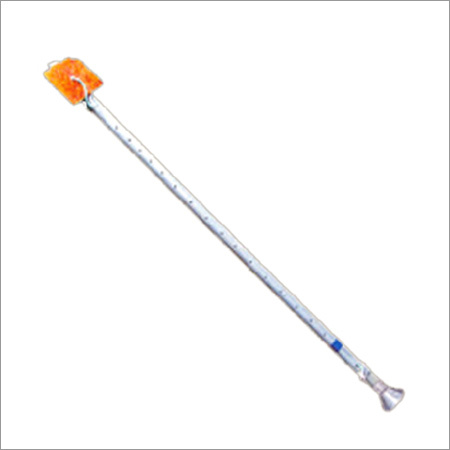
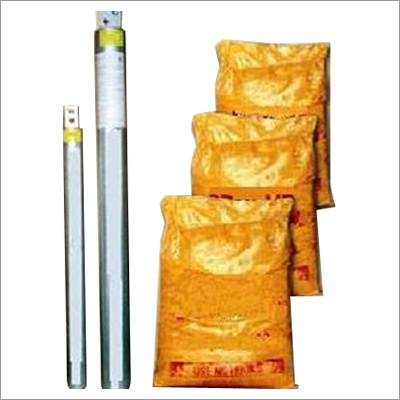
Copper Chemical Earthing Rods
4000 INR/Piece
Product Details:
- Strength High tensile strength (as per IS 3043)
- Copper Thickness 250254 microns (minimum 99.9% pure copper layer)
- Tensile Strength >600 N/mm
- Life Span 3040 years under proper soil conditions
- Purity Copper layer minimum 99.9%
- Diameter 14 mm, 17 mm, 25 mm (or as needed)
- Product Type Copper Chemical Earthing Rod
- Click to View more
X
Copper Chemical Earthing Rods Price And Quantity
- 4000 INR/Piece
- 1 Piece
Copper Chemical Earthing Rods Product Specifications
- Protection against electrical surges and fault currents by providing efficient grounding
- Length: 10003000 mm (customized), Diameter as specified
- Copper layer minimum 99.9%
- Copper Chemical Earthing Rod
- 3040 years under proper soil conditions
- 14 mm, 17 mm, 25 mm (or as needed)
- Depends on length and diameter (typically 2-8 kg per rod)
- High purity copper bonded steel
- High tensile strength (as per IS 3043)
- >600 N/mm
- 250254 microns (minimum 99.9% pure copper layer)
- Copper brown
- Minimal, according to standards IS 3043
- Copper bonded, corrosion resistant finish
- Earthing system for electrical installations, substations, power plants, industrial, and commercial buildings
- Round/Rod
Copper Chemical Earthing Rods Trade Information
- 50 Piece Per Day
- 2 Days
- All India
Product Description
Copper Chemical Earthing Rods is perfectly suitable for the industries where high performance earthing is needed for preventing destruction to key earth electrode in the soil. This type of electrode ensures the total safety to the human life and machines. The Copper Chemical Earthing Rods is available in different types and specifications.
Specification
| Length Of Rod | Standard |
| Equipment Type | Copper Bonded Grounding Rod |
| Usage/Application | Transformer |
| Finish | Brass |
| Material | Galvanized Iron (GI), Copper |
| Condition | New |
Seamless Copper Bonding for Unmatched Durability
Each rod features a seamless, molecularly bonded copper coating over a high tensile steel core. This construction ensures longevity, superior corrosion resistance, and consistent conductivity, even in challenging soil environments. High purity copper (minimum 99.9%) guarantees rapid dissipation of fault currents.
Versatile Application Across Industries
These rods are designed to provide efficient earthing solutions for a range of sectors including substations, industrial facilities, power plants, and commercial buildings. Their adaptability to various soil types and customizable dimensions make them suitable for diverse installation requirements.
Ease of Installation and Low Maintenance
Copper Chemical Earthing Rods can be hammered, driven, or augered into the ground with minimal effort. Installation is straightforward, while their robust design ensures low ongoing maintenance and dependable operation throughout their extensive service life.
FAQs of Copper Chemical Earthing Rods:
Q: How are Copper Chemical Earthing Rods installed?
A: They can be hammered, driven, or augered directly into the ground, allowing for a straightforward installation process suited to most site conditions. Threaded or plain ends are available to accommodate various connection requirements.Q: What advantages does copper chemical bonding provide in these rods?
A: The molecularly bonded copper layer ensures long-term corrosion resistance, superior electrical conductivity, and mechanical integrity, particularly in soils with high salt or moisture content. This makes them ideal for aggressive environments.Q: When should Copper Chemical Earthing Rods be used in an electrical system?
A: They are recommended whenever an efficient, long-lasting earthing system is requiredespecially in substations, power plants, industrial complexes, or commercial structures facing exposure to harsh soil conditions or requiring rapid fault current dissipation.Q: Where can these earthing rods be applied?
A: They are suitable for all soil types throughout India, including regions with high salt levels or moisture. Common applications include electrical installations in substations, factories, commercial sites, and power infrastructure.Q: What factors determine the current carrying capacity of each rod?
A: Current carrying capacity depends on the rods diameter, length, and installation method. Depending on specifications and site installation, rods can handle up to 80 kA of fault current.Q: How do these rods contribute to system and personnel safety?
A: By providing low resistance grounding, these rods efficiently dissipate electrical surges and fault currents, minimizing risks of electric shock and equipment damage. Their consistent performance ensures ongoing protection for both systems and personnel.Tell us about your requirement
Price:
Quantity
Select Unit
- 50
- 100
- 200
- 250
- 500
- 1000+
Additional detail
Mobile number
Email

Other Products in 'Earthing Electrodes' category

We Are Mainly Deals In Uttarpardesh, Rajastaha, Uttaranchal, Punjab, Uttarakhand
Get In Touch
- KH-747, Near Lajwanti Place, Kamla Market, Meerut Road, Sihani, Ghaziabad - 201001, Uttar Pradesh, India
-
 Send Inquiry
 Send Inquiry
- Phone :07971549215
- Mr. Sanjeev Arora (Managing Director)
- Mobile :07971549215
 Send Inquiry
 Send SMS
|


 |
ARORA ELECTRICALS
All Rights Reserved.(Terms of Use) Developed and Managed by Infocom Network Private Limited. |
